Essay 2 intro

Within the genre of magical realism, everyday settings where magical events occur without explanation, become the normal. Exit West by Mohsin Hamid is a prime example of this. In his 2017 novel he uses “magic doors” to transport characters to new places on Earth. These magic doors served as a way of escaping crisis or war, which included the main characters Nadia and Saeed. But it also counted towards the little peers to the other countries and moments in the novel. Although some people, such as Yogita Goyal would argue that these magic doors cause a generalization and deny the harsh reality of the immigration process. They argue that these doors remove the historical context of it all, without it, the novel loses it place. I say that the magic doors serve as a way to give context and introductions to problems and events/situations without having to truly spectacularize it. Sure, it may make thing banal at times, but when comparing it to other media it also does not spectacularize anything.

-Pledge VVB

Notes for later:

Banal vs the spectacular

Magic Doors showcase a way to give context and introductions to problems and events/situations without having to truly spectacularize it. Tell it as it is, not make a spectacle and dramatize it. Just because it isn’t as descriptive (minus the birthing part) or dripping with context doesn’t make the experience any less real or valid.

Secondary Source Blueprint of Goyal’s Argument

I. Citation:

Goyal, Yogita. “‘We Are All Migrants’: The Refugee Novel and the Claims of Universalism.” MFS Modern Fiction Studies, Johns Hopkins University Press, 23 June 2020, muse.jhu.edu/article/758170.

II. Thesis:

Goyal’s Thesis: The refugee, much like Said’s exile, is both concept and condition, and, most of all, a legal entity subject to new and old technologies of surveillance, capture, detention, torture, and death. As Said explains, even though displacement is “unbearably historical” (174), it can create “a discontinuous state of being” (177), hence the many universalisms and abstractions of the literature of migration and homelessness. Although often seen as a custodian of an elite Eurocentric canon (whose exclusions he critiques but remains bound within), Said is, I think, aware of these contradictions.

In this essay, I draw on Said’s meditations on exile to critique Mohsin Hamid’s representation of the migrant as a universal figure in his acclaimed 2017 novel Exit West. I propose that Hamid naturalizes the fact of migration in a way that evacuates the specific historical experience that generates it, rendering banal what must remain historical. Along the way, I consider Hamid’s equation of migration with storytelling, exploring how such a claim reorders our understanding of the novel’s relationship to place. I also examine how the refugee novel as a genre reckons with the difficulties of representation in relation to debates in visual culture, as well as in response to a number of recent calls to stage the contemporary refugee in connection with past histories of racial dispossession. Placing such efforts next to vital developments in the emerging field of critical refugee studies, I probe claims to the singularity of the refugee, as well as attempts to create itineraries of ethical and historical relation.

My Words: Goyal believes that Mohsin Hamid makes migration too normal, too universal. Goyal wishes to persuade the reader that Exit West is romanticized and that it portrays modern immigration from an unrealistic almost idealistic perspective. With his method of storytelling, the reader is left with little detail besides inferences and guess. There is a lot left unsaid and not understood such as place, context, time, culture and more. In doing so, he overshadows and overlooks the historical context and anguish of migration overall. Basically, the novel is almost too positive (not inherently good) and/or neutral. Goyal analyzes Exit West as a genre that tackles issues of representation, namely the way that modern migrants are portrayed in light of racist past practices. Goyal looks at assertions that the experience of being a refugee is unique and attempts to establish moral and historical linkages between various migrations. Thus, the argument is tied to Said’s contention that immigration laws should be viewed as such because everyone experiences travel and exile at some point in their lives.

III. Analysis:

Goyal starts off with reviewing Edward Said’s thoughts on exile by quoting Said one after another. Said’s contention that there is a “rift forced between a human being and a native place” is evident. Said encourages taking into account the historical circumstances underlying migration and then criticizes the rise of nationalism in the contemporary refugee genre. Said becomes a major voice Goyal uses within the entire article that Goyal often returns to.

After this, Goyal addresses what Hamid was trying to argue and convey in Exit West. Said and Goyal’s opinions on the genre of migration novels are at odds with this debate. Goyal believes that Hamid’s general thesis, which is that we are all migrants, falsely romanticizes the experience of migration due to the fact that it generalizes far too much and does not address the context and history of it all. Goyal firmly believes that we need history and historical, if we render it too relatable or common, then it loses its place.

Goyal then provides context for the reader by quoting various scholars (ex. Morrison, Nguyen) the historical significance of migration and how it contributes to xenophobia. By citing these additional voices, Goyal reinforces the idea that being a refugee is a difficult grueling experience, and by emphasizing the “we are all migrants,” notion that Hamid tried to convey, it lessens the suffering that real migrants go through. Goyal then goes back to their criticism of Exit West, asserting that readers are drawn to Hamid’s book because of its idea of acceptance and love in its storytelling. However, Goyal emphasizes the main point of Exit West, since it ignores history and the persistence of xenophobia, undervalues the actual complexity of modern migration. As said before, Exit West is romanticized.

IV. Three Rhetorical Strategies:

1. Sources and expert voices. Having a good connection or source can really help further or add to an author’s claim/argument. A strong one can really make a difference or have some leverage.

Example: In a prophetic essay, Edward Said explains that “our age—with its modern warfare, imperialism, and the quasi-theological ambitions of totalitarian rulers—is indeed the age of the refugee, the displaced person, mass immigration” (“Reflections on Exile” 174). For Said, this reality prompts a complex meditation on the uneasy though fecund relationship between criticism and exile. Exile, Said suggests, is “the unhealable rift forced between a human being and a native place, between the self and its true home” (173). He concedes that “exile is strangely compelling to think about but terrible to experience.” Yet he notes that “modern Western culture is in large part the work of exiles, émigrés, refugees.”

(pg 239)

2. Rhetorical Questions. By using rhetorical questions, it made the reader question the authors arguments or topics being challenged with said questions.

Example: If the refugee is a creation of law, what does it mean to render her myth, metaphor, or universal human? Why not try to provide interiority to the familiar icon of a Muslim woman in a veil or a young man with a stubble increasingly attracted to Islam instead of following their ordinary lives through phones, magic doors, and strained conversations about love? (pg 250)

3. Strong counter argument with evidence. Specifically with Goyal, they use text evidence from the novel to support their counter argument. Directly countering what is stated in the text is, to me, a very bold method that when done correctly is very persuasive.

Example: At the end of her life, “it seemed to her that she too had migrated, that everyone migrates, even if we stay in the same houses our whole lives, because we can’t help it” (209). To claim that “we are all migrants through time” surely risks banalizing the experience of migration in the way that Said had warned against, turning a particular experience into a metaphor for the human condition, undifferentiated by place or power. While it may be a truism to note that much of the world is on the move, we also need to stratify forced migrations, as well as understand why paths of migration follow colonial histories or current geopolitical agendas of militarized states and how such movements empower new forms of white supremacy and global fascisms. (pg 251)

V. Rhetorical Moves to Not Use

1. Too many voices used. Although having many sources and voices helps towards good ethos and logos which in turn can help to further an argument, too many voices and sources can blur and muddy the overall argument. The reader can get lost and forget the authors argument because it gets drowned out by these experts.

-Pledge VVB

Secondary Source Blueprint of Anam’s Argument

I. Citation:

Anam, Nasia. “The Migrant as Colonist: Dystopia and Apocalypse in the
Literature of Mass Migration.” ASAP/Journal, vol. 3, no. 3, Sept. 2018, pp. 653–677, https://doi.org/10.1353/asa.2018.0043.

II. Thesis:

Anam’s Thesis: The proximity of the coming apocalypse
is a shared feature in these works, yet where the existential threat lies within
the narrative can differ greatly. The threat may be perceived as the kind of
military violence, political upheaval, or climate disaster that compels people to
migrate away from their homelands. Contrarily, the threat may be perceived
as the arrival of those very migrants themselves. This difference in vantage
point has immense ideological weight in determining what a given apocalyptic
narrative pinpoints as the cause of impending end-times, and indeed, what it
actually means for Western civilization to crumble. (pg 654)

I seek to draw a connection between literary form and the conditions of migration as
they transition from those of arriving to settling, and by dystopian extension,
to dominating. The texts I examine here all imagine the ends of this historical
process to be the total destruction of Western civilization. However, whether
this end is understood to be apocalyptic—or even how one comprehends the
semiotic significance of “apocalypse” as a concept—is determined by the way
the text portrays the subjectivity of the migrant. (pg 657)

My Words: Europe has been anxious about Islam and the East since forever. The mass migration of those of Islamic nationality is what awoken Europe as an entity and culture, which made nativist Europeans and Westerners concerned that their way of life will be threated, overrun and taken over by middle eastern migrants. They essentially fear being colonized by the middle east when ironically, Europe is also built of migrants and immigrants who did the same. The main takeaway is immigration is not as evil and destructive as Western media has depicted it out to be for centuries. There is a narrative that is being overlooked thanks to this apocalyptic image.

III. Analysis:

Anam starts out by hooking the reader by addressing the public and political
discourses surrounding the so called “migrant crisis” and the perpetual “War on Terror.” She then mentions how the word apocalypse is being used more by journalists, bloggers, and politicians across the spectrum to describe a number of factors surrounding mass migration, whether it be the dire circumstances, the state of the “host” nations in Global North, or the future of the world at large. Basically, really scaling the how the word is being used and how it is mainly being used in the context of what will happen if too many Islamic migrants are to let into Europe. Anam then later summarizes what articles she will draw on to emphasize this point.

Then she provides historical context for her argument. She introduces examples of migration and colonialism, and how the two have been interconnected for centuries. This really helps to give her argument a broader context and wider range. For example, she speaks on the relationships Europe and Islam/the East. Europe has been anxious about Islam and the East since forever. “The very idea of Europe as we know it now—invented
as it was in the early modern period—was formed in contrast to the threat of
the Islamic empires encroaching into continental and Levantine territories,
and imperiling Christendom as such.” (pg 657) Then she moves on to the overall fear mongering and propaganda placed over it all, with examples of Thomas More’s Utopia, seeds of nationalism and nativist views by politicians such as Enoch Powell and the “War on Terror.” After that she touches on how “national identity” started to cause migrates as outsiders or an outside force as there was a political shift inward as people migrated to England and France. Anam used Burgees’s novel that once again paints a dystopian picture and fear of Islam taking over Great Britian and France (and technically all of Europe) culturally and ideologically. The irony here is that this is quite literally the thing England/Great Britian, France, and many Western nations did during European expansion.

Anam then moves on to examples that help support her thesis. In particular Aslam’s novel “Maps for Lost Lovers” stands out because it doesn’t depict a dystopia, and migrants in European exiles lack agency. Then Anam touches on Mohsin Hamid’s Exit West. Anam connects the two works by explaining that both novels are unique due to the perspective being in the migrant’s perspective rather than the Western entities. Exit West in particular is significant because it demonstrates that mass migration doesn’t necessarily lead to any specific reaction without idealizing European ideology. The two works brought a new narrative and perspective that Anam was trying to emphasize.

Anam’s article then concludes strongly by revisiting the initial political debates and then revisiting the idea that if we change our perspective, we can then see that mass migration does NOT have to be seen as apocalyptic. If we move away from this narrative heavily based in old time nativism and xenophobia, we can see it in a different light rather than in the ways of the fear mongering brought by fear of opposition.

IV. Three Rhetorical Strategies:

1. The numbered, titled, and sectioned headers. It really helped to tie the overall organization of the work together and helped with cohesion. It helped to prepare the reader for what topic is going to be introduced.

Examples:

I. THE FEAR OF A MUSLIM PLANET

II. INVERTING COLONIAL “UTOPIA”

2. The personal voice and insertion AKA use of “I.” It adds a more personal touch and value to the argument because the author can actually relate to their argument.

Examples:

“Secondly, I argue that perhaps even more powerfully, the political
underpinnings of these texts harken back to the centuries even prior to colonization, to European anxieties regarding the Islamic empires that stemmed from
the Crusades” (pg 656)

“The texts I examine here all imagine the ends of this historical
process to be the total destruction of Western civilization.” (pg 657)

“At the heart of each text I examine lies the question: Is mass migration a new form of colonization, or is it simply the only possible means of survival on our increasingly unstable globe?” (pg 657)

3. The way Anam always went back to her point and circled back. She would introduce something, connect it, then return back to the overall idea or moment. For example, Anam starts out with mentioning the political discussion around migration and returns to it in the end

V. Rhetorical Moves to Not Use

1. Though not Rhetorical, I’m not a big fan of the formatting. Sometimes it was endearing but sometimes it was distracting. It’s like a zig-zaggy pattern that gets interuppted by the quotes. Sometimes I enjoyed it but the way that the paragraphs move around due to it was a little distracting.

-Pledge VVB

Essay 1 Revised

AI: Cheat Code or Tool?

Recently, Artificial Intelligence, or AI for short, has taken the internet by storm. A few examples are the trends of creating AI-generated art and pictures or turning oneself into Tim Burton or Disney characters. People create AI-generated photos and ask ChatGPT to generate random things or answer questions. Want to hear a well-known character or famous person sing Chandelier by Sia? You’ve got numerous covers on TikTok and YouTube. Want to create or interact with an AI character for various purposes? Platforms like Character AI, Snapchat AI, and Instagram’s new Meta AI characters have got you covered. All of these examples show the rapid growth of AI in our digital spaces. Creativity is a prominent part of these spaces, and with AI’s rise, it is being challenged. People are questioning AI’s role in the creative process. Rather than the end of creativity and originality, I believe AI can be a tool of aid.

Using AI in artistic spaces is a gray area in discussion, though it often leans negative. As an artist myself, this narrative follows. I’ve seen countless video essays on how artists view AI as stealing their styles to generate its images. This negative branding made me hesitate to post my work. The company Meta recently revealed they would use publicly available photos and text from their platforms to train a text-to-image generator model called Emu. To combat this, artists started protesting by using filters that scramble the algorithm. They spread information about the change or migrated off Meta platforms (Growcoot). Before the rise of AI, some artists had a habit of tracing (copying) other artists’ work. They would post these copies with slight changes as their own, often enraging the art community as a result. In a way, AI generation is the new tracing problem. People claim the results of these AI pieces as their own, even though they’re made from the labor of other artists. The general consensus of creators is that AI is not original. Ted Chiang drives this narrative in his article, “Why A.I. Isn’t Going to Make Art.” Many artists would agree with Chiang that an “image might be exquisitely rendered, but the person entering the prompt can’t claim credit for that.” This lack of credit is due to those people only entering the prompt, not the choices, not the thoughts, and not the work. AI has two primary methods of creating content: taking the average of choices/answers that people have made or style mimicry (Chiang). Both come from creators whose work is being referenced and used to train the AI. As Dr. Mark Sample said, “Your AI is human every step of the way.” AI could not create its compositions, regardless of their quality, if not for human creators. They are a product of trends, just as we are.

What seems to differentiate AI trends from “normal” trends are the contexts they come in. When many think of AI, we think of automation and as previously mentioned, theft on some scale. Many people have been relying on AI heavily rather than in moderation. Many students have been utilizing AI to generate answers or type up essays. Companies have been using AI to do the jobs of writers, artists, and workers in general. However, if we consider AI as a tool for creativity rather than a cheat, this mindset may paint a different picture. Notice how I am trying to emphasize the word tool. Creating is never an easy process. Trial and error is what makes us better. Chiang says that “any writing that deserves your attention as a reader is the result of effort expended by the person who wrote it.” People read and engage with things because someone put thought into them in some way. Chayka takes it a step further saying that writing (or in this sense creating) without thinking is simply content. At first, I disagreed with this take. In our current digital era, everything is content, and not all of it is mindless. Then I took another look. The same content is typically viral or trending. Those same formats are being reused over and over. Quick-form content is dominating because it often takes little thought, setup, and time. This kind of repetitive content provides contrast to other creators who prize genuine thought and creativity in their work. Some creatives choose to challenge themselves in those short-from restrictions.

With this in mind, I think that AI can also be used to create thoughtful content rather than the thoughtless kind. Chayka points out in his article that his AI self, Robot Kyle, drew to attention all of his “semi-subconscious tics that constitute [his] writing.” The AI highlighted those lazy patterns we as creators often fall back to. For artists, it may be drawing only ¾ portraits, for dancers, it may be the same moves in freestyle, and for writers, bad habits such as malicious comma use. In the words of George Orwell, many practices are “full of bad habits which spread by imitation, and which can be avoided if one is willing to take the necessary trouble.” Now Orwell may have been specifically speaking in the context of the English language, but the same logic can be applied to AI use. AI can be used to check for those bad habits we often fall back into. Just like for this very essay, I utilized ChatGPT and WritersDiet to find my passive voice and identify weak points. Rather than just relying on it, I used it and learned from it. Just as my professor Dr. Churchill told my Writing 101 class, “If you use AI to check your essays, save two copies. One as the original, the other the revised one aided with AI.” This way we could learn from our habits and mistakes, rather than letting AI do all the work mindlessly. We also need to remember that tools are optional. We still have the option of resources other than AI, but if we use its intelligence, this is one of the ways to incorporate it more progressively.

Another way to use AI is to help with those especially hard roadblocks. Have an idea you can’t quite express? Bouncing off of people not working? Can’t find that perfect source or reference? AI could be the way to go to help brainstorm. A perfect example of this would be Vauhini Vara’s article “Ghosts.” After enlisting the help of AI tools, she could finally write through a sensitive topic: her sister’s death. Vara generated 9 stories in total by authoring “the sentences in bold and GPT-3 [filling] in the rest.” She and her editor altered the AI text after each generation, adding on little by little until her story was complete. She used AI as a tool to help her progress, not as a crutch to do all the work. GPT-3 could only guess what Vara would say next, it didn’t know the memories or the stories of Vara with her sister. The AI would often drift from the topic or purpose and contain numerous inconsistencies and untruths. It was a good tool to get the content out, but it could not write on such a personal idea for her. This is an example of thoughtful content. Still creating while using the AI to help the process, not do the thinking. The generations that AI can make, if detailed enough, could help get that one idea that’s been on the tip of your tongue out. Sometimes we need a reminder, a path to help get back in the flow and AI could be that tool.

The discussion of AI is all about the context. On a wider scale, AI is often labeled with negative connotations: cheating, theft, laziness, and mindlessness. But, when discussing the argument of creativity, AI can be a tool of progress when used mindfully. When AI is paired with thoughtful engagement, it can help creators make progress or overcome roadblocks. If we think of AI as another resource that can be used when needed rather than a crutch, it becomes another tool in the toolbox. When review time comes or you’re looking for something specific, maybe it’s the right tool for the job. You don’t always need it, but when you do it’s rather handy, no?

__φ(..)

Works Cited:
Chayka, Kyle. “My A.I. Writing Robot.” The New Yorker, 11 July 2023, www.newyorker.com/culture/infinite-scroll/my-ai-writing-robot.

Chiang, Ted. “Why A.I. Isn’t Going to Make Art.” The New Yorker, 31 Aug. 2024, www.newyorker.com/culture/the-weekend-essay/why-ai-isnt-going-to-make-art.

Growcoot, Matt. “Meta Is Using Your Instagram Photos to Train Its ‘amazing’ Ai Image Generator.” PetaPixel, 14 May 2024, petapixel.com/2024/05/14/meta-is-using-your-instagram-photos-to-train-its-amazing-ai-image-generator/.

Orwell, George. “Politics and the English Language.” The Orwell Foundation, 3 Apr. 2024, www.orwellfoundation.com/the-orwell-foundation/orwell/essays-and-other-works/politics-and-the-english-language/.

Vara, Vauhini. “Ghosts.” Believer Magazine, 20 Sept. 2023, www.thebeliever.net/ghosts/.

AI Usage:
I acknowledge the use of  to generate materials that were included within my assignment in modified form.

The following prompts were input into :
-Please identify any instances of passive voice in this essay and prompt me to fix them
-Please identify more instances of passive voice in this essay and prompt me to fix them

The output obtained was:
Here are the instances of passive voice I found in your essay:
“AI’s role in the creative process is being questioned”
Suggested revision: “People are questioning AI’s role in the creative process.”
“AI would not be able to create its compositions, no matter how good or bad of quality they may be.”
Suggested revision: “AI could not create its compositions, regardless of their quality.”
“Bad habits which spread by imitation and which can be avoided if one is willing to take the necessary trouble.”
Suggested revision: “Bad habits spread by imitation and people can avoid them if they are willing to take the necessary trouble.”
These are the main cases of passive voice that could be revised for more directness. Let me know if you’d like help with any of the revisions or further suggestions!

Here are additional instances of passive voice in your essay, along with suggestions for revision:
“AI-generated pictures to asking ChatGPT to generate random things or answer questions.”
Suggested revision: “People use AI-generated pictures and ask ChatGPT to generate random things or answer questions.”
“AI’s role in the creative process is being questioned” (mentioned before but can be expanded)
Suggested revision: “People are questioning AI’s role in the creative process.”
“AI generation is the new tracing problem.”
Suggested revision: “People see AI generation as the new tracing problem.”
“AI is not original.”
Suggested revision: “Many argue that AI lacks originality.”
“The overall deduction is AI is not original.”
Suggested revision: “People conclude that AI lacks originality.”
“The process of creating is never an easy road.”
Suggested revision: “Creating is never an easy process.”
“It would not be able to create its compositions…” (already suggested but rephrased more)
Suggested revision: “AI could not create its compositions on its own…”
“If we look at AI in the context of a tool for creativity rather than a cheat…”
Suggested revision: “If we consider AI a tool for creativity rather than a cheat…”

By switching these sentences to active voice, your essay will sound more direct and dynamic. Let me know if you’d like further revisions or explanations!

The output was changed by me in the following ways:
Some of the inputs I implemented as is, others I used as a reference and edited them as needed.
Changed outputs:
“People use AI-generated pictures and ask ChatGPT to generate random things or answer questions.
→ People create AI-generated photos and ask ChatGPT to generate random things or answer questions.
Using Writer’s Diet, helped me identify different eligible words to change and alter. I then used it as a guide to revise my essay.

-Pledge VVB

Comments:

From Dr. Chill and Melz:

Focus in on the Artist’s conversation with AI rather than the general. Home in on artist.

Artists complaining about AI (Fight against Meta Emu, and Such)

Reduce clutter and get to the point, stronger but the same voice.

Get more specific in examples and language.

Angie:

I really enjoyed hearing your take on AI as a fellow artist! I like the tool analogy, I think that’s a good way of looking at AI when it comes to anything. Your thesis and hook are great, and your transitions between paragraphs are good! I think you should focus a little more on the “Ghosts” example since it could really help your argument a lot, and it felt like the paragraph on it was not as deep as it could be. Another suggestion I’d make is to make sentences less wordy since I got a little lost sometimes. Great work overall, though!!!

Melissa/Melz:

I love the fact that as an artist you are having your voice emerge among the others and you are conveying your ideas very well. I could say that you could try to focus on the artistic question and also reduce the words to avoid losing the readers. But overall, I love the idea in it.
Essay 1 Draft

AI: Cheat Code or Tool?

Recently, Artificial Intelligence, or AI for short, has taken the internet by storm. A few examples are the trends of creating AI-generated art and pictures or turning oneself into Tim Burton or Disney characters. People create AI-generated photos and ask ChatGPT to generate random things or answer questions. Want to hear a well-known character or famous person sing Chandelier by Sia? You’ve got numerous covers on TikTok and YouTube. Want to create or interact with an AI character for various purposes? Platforms like CharcterAI, Snapchat AI, and Instragm’s new Meta AI characters have got you covered. AI is growing in our digital space and its footprint is growing. People are questioning AI’s role in the creative process: Will AI bring the end of creativity and originality, or will it be a tool of aid?

As an artist, using AI is a gray topic of discussion, though it often leans negative. As I am a creator myself, it is the same. I’ve seen countless protests and video essays on how artists have viewed AI as stealing and infringing on their styles to generate their images. It made me hesitate to post my work. When Meta revealed they would use publicly available photos and text from the platforms to train a text-to-image generator model called Emu, many artists found filters that scramble the algorithm, protested and spread information about the change, or migrated off Meta platforms (Growcoot). In a way, AI generation is the new tracing problem. People claim the results of work heavily based on someone else, not just inspiration. The overall conclusion is AI is not original. Ted Chiang drives this narrative in his article, “Why A.I. Isn’t Going to Make Art.” Many artists would agree with Chiang that an “image might be exquisitely rendered, but the person entering the prompt can’t claim credit for that.” This is because those people only entered the prompt, not the choices, not the thoughts, and not the work. AI has two primary methods of creating content: taking the average of choices/answers that people have made or style mimicry (Chiang). Both come from creators whose work is being referenced and used to train the AI. As Dr. Mark Sample said, “Your AI is human every step of the way.” AI could not create its compositions, regardless of their quality, if not for human creators. They are a product of trends, just as we are. Although, it may not be as sinister as we make it out to be. In a way, AI steal like an artist just as we do (Kleon).

What seems to be the main problem is the context or the Kairos of AI. When many think of AI we think of automation and as previously mentioned, theft on some scale. Many people have been relying on AI rather than in moderation. Many students have been utilizing AI to generate answers or type up essays. Companies have been using AI to do the job of writers, artists, and workers in general. However, if we consider AI a tool for creativity rather than a cheat, it may paint a different picture. Notice how I am trying to emphasize the word tool. Creating is never an easy process. Trial and error is what makes us better. Chiang says that “any writing that deserves your attention as a reader is the result of effort expended by the person who wrote it.” People read and engage with things because someone put thought into them in some way. Chayka takes it a step further saying that writing (or in this sense creating) without thinking is simply content. At first, I disagreed with this take. In our current digital era, everything is content, and not all of it is mindless. Then I took another look. The same content is typically viral or trending. Those same formats are being reused over and over. Quick-form content is dominating because it often takes little thought, setup, and time. However, this doesn’t stop other creators from having genuine thought and creativity in their content. Rather, some creatives challenge themselves in those short-from restrictions.

With this in mind, I think that AI can also be used to create thoughtful content rather than the thoughtless kind. Chayka points out in his article that his AI self, Robot Kyle, drew to attention all of his “semi-subconscious tics that constitute [his] writing.” The AI highlighted those lazy patterns we as creators often fall back to. For artists, it may be drawing only ¾ portraits, for dancers, it may be the same moves in freestyle, and for writers, bad habits such as malicious comma use. In the words of George Orwell, many practices are “full of bad habits which spread by imitation and which can be avoided if one is willing to take the necessary trouble.” Now Orwell may have been specifically speaking in the context of the English language, but the same logic can be applied to AI use. AI can be used to check for those bad habits we often fall back into. Rather than just relying on it, use it and learn from it. Just as my professor Dr.Churchill told my Writing 101 class, “If you use AI to check your essays, save two copies. One as the original, the other the revised one aided with AI.” This way we could learn from our habits and mistakes, rather than letting AI do all the work mindlessly. We also need to remember that tools are optional. We still have the option of other resources rather than AI, but if we use the intelligence, this is one of the ways to use it more progressively.

Another way to use AI is to help with those especially hard roadblocks. Have an idea you can’t quite express? Bouncing off of people not working? Can’t find that perfect source or reference? AI could be the way to go. A perfect example of this would be Vauhini Vara’s article “Ghosts.” In the article, she uses AI to help her write through a sensitive topic matter: her sister’s death. Using AI, Vara could finally bring herself to write about it. Vara generated 9 stories in total by authoring “the sentences in bold and GPT-3 [filling] in the rest.” She and her editor altered the AI generations after each generation, adding on little by little until her story was complete. She used AI as a tool to help her progress, never using it as a crutch to do all the work. Not to mention the AI would often drift off from the topic or purpose and contain numerous inconsistencies and untruths. This is an example of active content. Still thinking while creating but using the AI to help through it, not do the thinking. The generations that AI can make are typically the average of what people create or answer based on what the prompt is, and if niche or specific enough it could help get that one idea that’s been on the tip of the tongue. Sometimes we need a reminder, a path to help get back in the flow and AI could be that tool.

The discussion of AI is all about the context, the Kairos. On a wider scale, AI is often labeled with negative connotations: cheating, theft, laziness, and mindlessness. But, when discussing the argument of creativity, AI has the potential to be a tool of progress when used mindfully. When AI is paired with actual thought, it can help creators make progress or overcome roadblocks. If we think of AI as another resource that can be used when needed rather than a crutch, it becomes another tool in the toolbox. When review time comes or you’re looking for something specific, maybe it’s the right tool for the job. AI is like a pictureless Pinterest, both have an array of what you could need but not always exactly what you need. You don’t always need it but when you do it’s rather handy no?

Works Cited:

Chayka, Kyle. “My A.I. Writing Robot.” The New Yorker, 11 July 2023, www.newyorker.com/culture/infinite-scroll/my-ai-writing-robot.

Chiang, Ted. “Why A.I. Isn’t Going to Make Art.” The New Yorker, 31 Aug. 2024, www.newyorker.com/culture/the-weekend-essay/why-ai-isnt-going-to-make-art.

Growcoot, Matt. “Meta Is Using Your Instagram Photos to Train Its ‘amazing’ Ai Image Generator.” PetaPixel, 14 May 2024, petapixel.com/2024/05/14/meta-is-using-your-instagram-photos-to-train-its-amazing-ai-image-generator/.

Kleon, Austin. Steal like an Artist: 10 Things Nobody Told You about Being Creative. Workman Pub., Co, 2012.

Orwell, George. “Politics and the English Language.” The Orwell Foundation, 3 Apr. 2024, www.orwellfoundation.com/the-orwell-foundation/orwell/essays-and-other-works/politics-and-the-english-language/.

Vara, Vauhini. “Ghosts.” Believer Magazine, 20 Sept. 2023, www.thebeliever.net/ghosts/.

AI Usage:
I acknowledge the use of  to generate materials that were included within my assignment in modified form.

The following prompts were input into :
-Please identify any instances of passive voice in this essay and prompt me to fix them
-Please identify more instances of passive voice in this essay and prompt me to fix them

The output obtained was:
Here are the instances of passive voice I found in your essay:
“AI’s role in the creative process is being questioned”
Suggested revision: “People are questioning AI’s role in the creative process.”
“AI would not be able to create its compositions, no matter how good or bad of quality they may be.”
Suggested revision: “AI could not create its compositions, regardless of their quality.”
“Bad habits which spread by imitation and which can be avoided if one is willing to take the necessary trouble.”
Suggested revision: “Bad habits spread by imitation and people can avoid them if they are willing to take the necessary trouble.”
These are the main cases of passive voice that could be revised for more directness. Let me know if you’d like help with any of the revisions or further suggestions!

Here are additional instances of passive voice in your essay, along with suggestions for revision:
“AI-generated pictures to asking ChatGPT to generate random things or answer questions.”
Suggested revision: “People use AI-generated pictures and ask ChatGPT to generate random things or answer questions.”
“AI’s role in the creative process is being questioned” (mentioned before but can be expanded)
Suggested revision: “People are questioning AI’s role in the creative process.”
“AI generation is the new tracing problem.”
Suggested revision: “People see AI generation as the new tracing problem.”
“AI is not original.”
Suggested revision: “Many argue that AI lacks originality.”
“The overall deduction is AI is not original.”
Suggested revision: “People conclude that AI lacks originality.”
“The process of creating is never an easy road.”
Suggested revision: “Creating is never an easy process.”
“It would not be able to create its compositions…” (already suggested but rephrased more)
Suggested revision: “AI could not create its compositions on its own…”
“If we look at AI in the context of a tool for creativity rather than a cheat…”
Suggested revision: “If we consider AI a tool for creativity rather than a cheat…”

By switching these sentences to active voice, your essay will sound more direct and dynamic. Let me know if you’d like further revisions or explanations!

The output was changed by me in the following ways:
Some of the inputs I implemented as is, others I used as a reference and edited them as needed.
Changed outputs:
“People use AI-generated pictures and ask ChatGPT to generate random things or answer questions.
→ People create AI-generated photos and ask ChatGPT to generate random things or answer questions.
Using Writer’s Diet, helped me identify different eligible words to change and alter. I then used it as a guide to revise my essay.

-Pledge VVB

Comments:

From Dr. Chill and Melz:

Focus in on the Artist’s conversation with AI rather than the general. Home in on artist.

Artists complaining about AI (Fight against Meta Emu, and Such)

Reduce clutter and get to the point, stronger but the same voice.

Get more specific in examples and language.

Angie:

I really enjoyed hearing your take on AI as a fellow artist! I like the tool analogy, I think that’s a good way of looking at AI when it comes to anything. Your thesis and hook are great, and your transitions between paragraphs are good! I think you should focus a little more on the “Ghosts” example since it could really help your argument a lot, and it felt like the paragraph on it was not as deep as it could be. Another suggestion I’d make is to make sentences less wordy since I got a little lost sometimes. Great work overall, though!!!

Melissa/Melz:

I love the fact that as an artist you are having your voice emerge among the others and you are conveying your ideas very well. I could say that you could try to focus on the artistic question and also reduce the words to avoid losing the readers. But overall, I love the idea in it.

Believing Game

What Would You Like a Cup Of: Coffee or Tea?

Coffee: That rich, warm, and inviting scent of coffee wafts through the air, what does it make you think of? For many people in America, a nice cup of Joe (or one of its cousins) is a perfect start to the morning. Coffee is one of if not the most iconic energy boosters. In addition, if you choose a blend or bean of a weaker strength, you can have a less strong coffee with a weaker caffeine boost if that’s your cup of, well, coffee. Coffee is rich and bold unlike its more subtle counterpart. The robust drink be customized to taste in many ways with additives such as sugar, cream, milk, or flavored syrups to simply ordering a coffee variant that one enjoys like a Frappuccino, latte, or cappuccino. Not to mention, there are numerous blends and styles and during the holidays or special events you can grab a seasonal drink that matches the festive or seasonal energy. Coffee can also have some health benefits though not as widely known. Want to lower the risk of numerous diseases and conditions? Then look no further. Coffee is linked to the lower likelihood of type 2 diabetes, kideney stones, liver cancer, and more (Sgobba and Benton). Though not as, directly, influential as tea, coffee still isn’t as black as many belittlers paint it to be. In some cultures, coffee is prominent star in their daily routines and social interactions such as in Europe or in the good ole U S of A.

Tea: Would you like a cup of tea? In comparison to its richer and bolder counterpart, tea has a reputation of being a bit more subtle, sometimes even tasteless. But this is not the case at all. Tea, just like coffee, has a vast variety of flavors, types, and styles, from green, herbal, floral, fruit, and many more. Just as coffee can be customized, so can tea. Adding milk, honey, sugar, syrups, and other additives can bring a tea to becoming your cup of tea. Think of Pearl Tea, more commonly known as Boba Tea, from Taiwan that took the world by storm. Milk teas and fruit teas with all kinds of additives that make the drink more appealing to many, and hey, its still tea. Another aspect of tea, is the process to make it. Many teas require specific needs so its flavors can fully be brough out, just like the difference between a drip coffee or an instant. Many people have found that making a nice warm cup (or iced if that’s your cup) can be very relaxing or refreshing. But the charm of tea lies in its other benefits. I mean, you’ve read the boxes. Many teas have health benefits besides a caffeine boost (though the caffeine levels are lower). They can directly help relieve stress and calm the body or help with digestion or boost one’s immune system. Tea also has a rich history and identity in numerous cultures both cultural, social, and in daily routines just like coffee.

/_/\ (\ __ /) A__A
( ˶•o•˶) ( •ω• ) ( •⤙• )
ଘ(ა🧋) (ა🍵૮)。 (☕٩ )੭

-Pledge VVB

Works Cited:

Sgobba, Christa, and Emilia Benton. “12 Surprising Health Benefits from a Simple Cup of Coffee.” Men’sHealth, 21 June 2022, www.menshealth.com/health/a19546477/health-benefits-coffee/.

About Me

Veyane

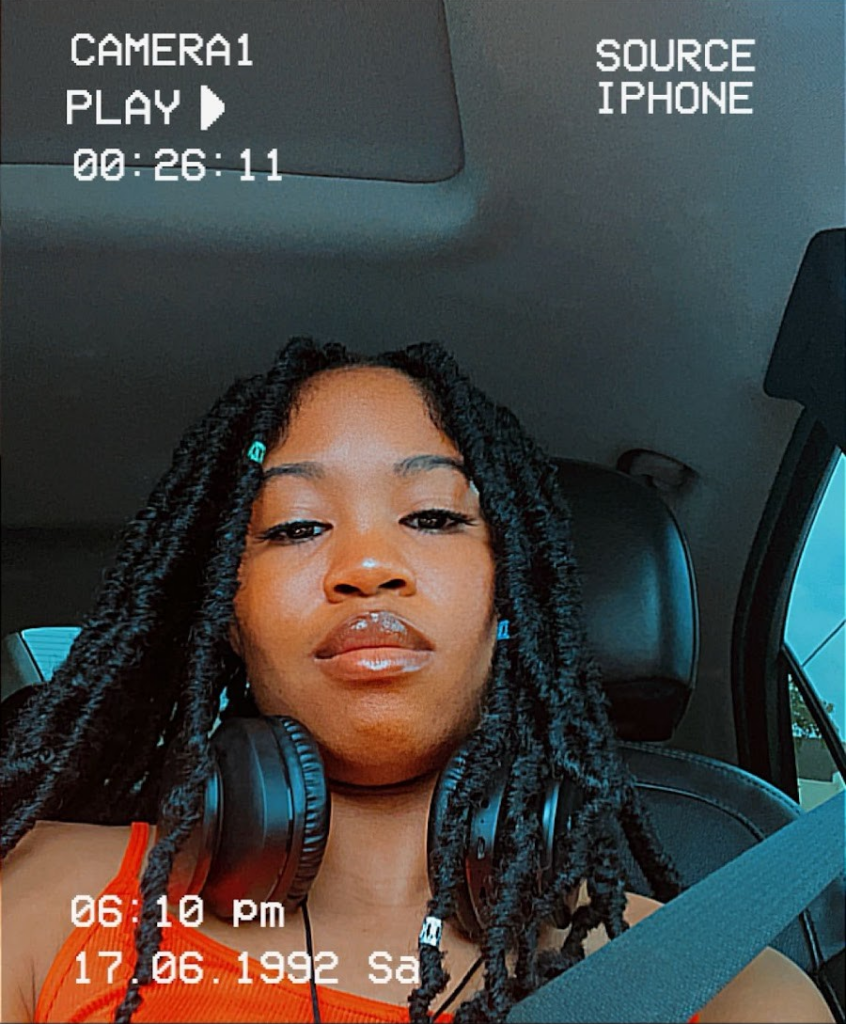
Basically I’m in love with two things: colors and art. They fuel me, they drive me, they inspire me. I enjoy finding the art in everything whether it be a literal art form (e.g. visual art, poetry, music, etc.) or something more niche (e.g. the art of science, relationships, coding). I have participated in numerous basic arts such as visual arts, music (DJing, producing, playing violin), dancing, singing (though only karaoke), and martial arts. However, I find myself being drawn and inspired by new forms over time and time again. I love researching and learning about things, finding the hidden art and details within. Reading a wiki page on things from the origin of words, how Scheele’s green came to exist, Victorian flower language, or why incests are born with specific patterns or behaviors. Now back to the color thing. I love color. If I could see through the Indie Kid (high saturation in colors) filter I would gladly do so. They keep me going and I consider my whole life essence color. Without color (purpose, relationships, emotions, healing, etc.) my world feels dull, void of its color. Now mind, black and white to me do not mean no color, nor does gray, it’s an image indescribable to others but myself. Though after all, it’s my vision and my view, of who I am.

Creating also fuels me, so take that away from me and I’d rather be in the hot Texas sun for hours. I aim to help my own visions, and the visions of others come to reality no matter the medium or form. So basically, Art + Color + Creating = Veyane.

<alt=”summer time with faux lox and orange colors”>

-Pledge VVB